Everybody knows that AI is taking over, and the way we work is changing every day. But to truly use the benefits of AI to your best advantage, you have to know a bit more about the inside of the technology. Not every system that uses AI works the same way.
Some are built to follow clear rules and repeat the same process every time. Others are designed to learn, react, and make decisions as things change.
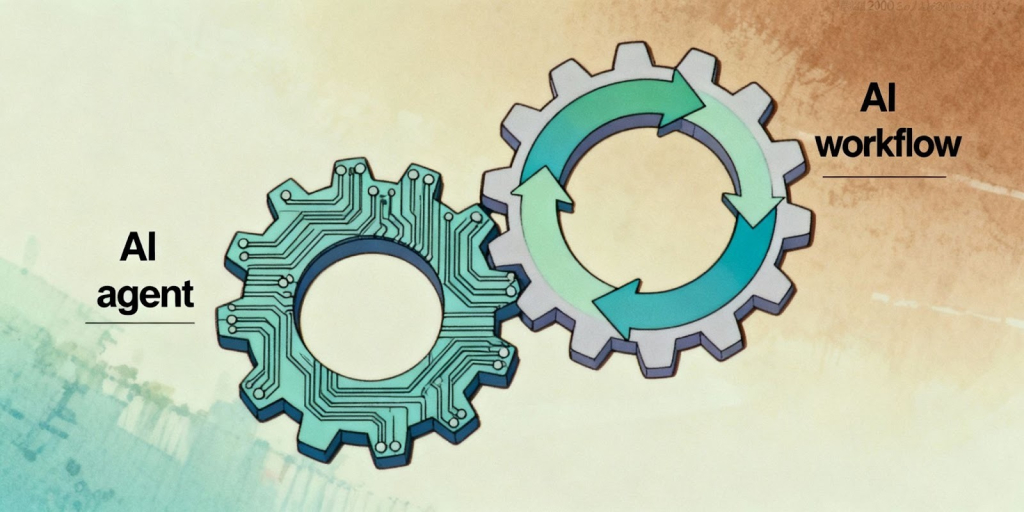
This article looks at the difference between those two worlds – AI agents and AI workflows. You’ll see how each works, where they fit best, and why the future of automation will likely depend on combining both.
What Are AI Agents?

Ask a few people in tech what an AI agent actually is, and you’ll hear a dozen different takes. Some describe it as smart software that gets things done on its own. Others think of it as a chatbot with access to lots of data. They’re not wrong, but both miss something important.
An AI agent isn’t really a tool in the old sense of the word. It’s closer to a colleague who knows what needs doing and gets on with it. The one who pays attention to what’s happening around it, makes small calls on its own, and adjusts when things don’t go as expected.
Most automation hits a wall the moment something changes. The power goes out, a condition breaks, a value is missing – and everything stops. AI agents don’t freeze like that. They can act flexibly: look at the situation, recalculate, and carry on. That quiet adaptability is what makes them so effective when life refuses to follow a straight line.
It helps to picture it in simple terms. Automation is like cooking from a strict recipe. AI agents act like a seasoned cook: walk into the kitchen, check what’s in the fridge, and figure out dinner from there.
How Do AI Agents Work?
At their core, agents follow a rhythm that feels familiar: notice, think, act, and learn. They gather information from whatever world they operate in – a dataset, a user request, a stream of signals – then they decide what matters, act on it, and see how it turns out. Next time, they will try to do it a bit differently.
They’re built on feedback rather than perfection. Each loop makes them a little better, a little more confident about what to do next. No one needs to rewrite the rules every time the situation changes. The agent adjusts through practice, much like a person who learns a job by doing it.
Over time, this loop builds something close to intuition. Not human intuition, but a kind of digital instinct that helps an AI agent make smart decisions in real time – and keeps the work moving even when the plan changes halfway through.
This is what separates agents from fixed workflows. They don’t just run commands; they engage with context. Over time, they build a kind of intuition about their tasks – not true intelligence, but something that feels close enough to make work smoother, faster, and far less mechanical.
This constant cycle of learning makes agents flexible. If one path fails, they try another. Over time, they refine their approach and improve accuracy without needing constant updates from humans.
Different agents have different layers of intelligence. Some operate on simple rules, while others combine machine learning, natural language processing, and predictive analytics. They are all adapted to the situation that’s around them, making the best of possible.
Real-world examples of AI agents
When was the last time you interacted with an AI agent? Most people would get the wrong answer without knowing. You probably interact with AI agents every day without noticing. When your phone suggests the fastest route home, that’s an agent interpreting traffic data and predicting travel time. When your email sorts out spam or your streaming platform recommends a new show, those are AI agents analyzing your habits and acting on them.
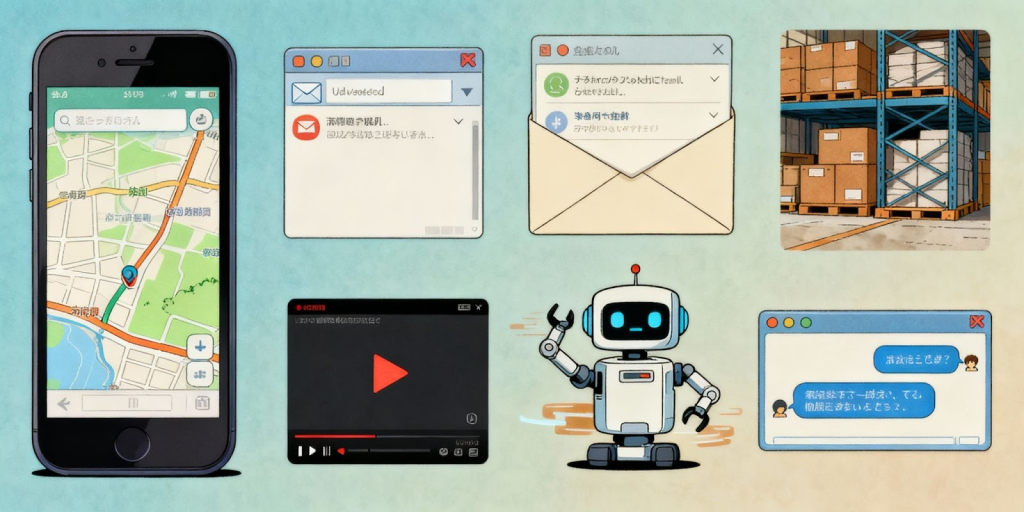
In business, AI agents take on more advanced roles. It may be a customer support agent that chats with clients, or a logistics agent that can track deliveries and reroute shipments if a delay occurs.
Each of these systems handles a specific responsibility, but the real strength appears when they collaborate. A network of agents can work together across departments – one tracking data, another managing communication, another handling payments. This cooperation is what turns isolated tools into complete AI solutions.
AI agents are not just the future of automation – they’re the next step toward systems that understand, adapt, and assist in real time.
What Are AI Workflows and How Do They Differ from Agents?
An AI workflow is the quiet organizer behind the scenes. It doesn’t make its own choices or rethink the plan halfway through. Everything it does has already been laid out – step by step, action by action. First, gather the data. Then check the rule. Then send the result where it needs to go.
When things shift unexpectedly, an AI agent can adjust and find another way forward. A workflow, on the other hand, holds its course. It repeats the same routine every time, which is often what businesses want for work that depends on accuracy and stability.
You could think of agents as the decision-makers and workflows as the steady planners – one reacts to change, the other keeps everything moving exactly as designed.
Unlike agents, workflows don’t make choices when things go off script. They don’t pause to interpret what’s happening or invent a new route forward. They stick to the plan, which makes them predictable and easy to trace when something goes wrong.
The real contrast between the two is in how they handle change. Workflows thrive on stability and structure, while agents thrive on flexibility. One keeps everything in order; the other steps in when order isn’t enough. When rules are clear and consistent, a workflow keeps operations stable. When conditions shift and no one knows what the next move should be, that’s when an agent takes over.
Both have their place. A company that runs only on agents would end up in chaos. A company that relies solely on workflows would move too slowly. Most modern systems use a mix of both – the workflow to maintain structure, and the agent to handle everything that can’t be neatly defined.
How Do AI Workflows Manage Complex Tasks?
An AI workflow breaks a big process into smaller, repeatable actions. Think of a travel booking platform. When a customer reserves a flight, the workflow confirms payment, sends a ticket, updates the calendar, and alerts customer support – all in seconds.
In a support center, the same logic might handle tickets. An email arrives, the workflow tags it, checks the topic, assigns it to the right department, and follows up once the issue is resolved. No one needs to watch over it.
Finance teams often rely on workflows to keep invoices moving. The system reads each document, checks the details, sends it for approval, and records it in the accounting platform. Every stage passes neatly to the next, so nothing gets lost or delayed.
When AI joins this process, the workflow becomes a little smarter. It’s no longer limited to rigid if-then logic. The system can recognize urgent payments, flag possible errors, and even spot where delays are likely to happen before they do. The path is still structured, but smarter – as if the assembly line could occasionally notice something off and nudge it back on track.
AI workflows don’t learn like agents do, but they keep businesses steady. They make sure no task is lost, no file misplaced, and no email unanswered. In the world of digital operations, that reliability is worth just as much as intelligence.
AI Agents vs. AI Workflows – What’s the Real Difference?
People often talk about automation as if it’s one big system that runs on its own. In reality, there are two very different ways it happens. Some processes depend on AI agents that make decisions in real time, while others rely on structured workflows that follow a fixed pattern. Understanding where each fits is what makes artificial intelligence in business actually work.
Dynamic Autonomy vs. Fixed Sequences
AI agents are built to handle movement and change. They react to what’s happening around them, decide on the next step, and move forward without waiting for permission. A workflow, on the other hand, sticks to the plan. It follows the order it was given – one action after another – and doesn’t look outside that structure.
That’s why business artificial intelligence usually blends both. Workflows bring discipline and repeatability. Agents bring flexibility, reacting to the unexpected. Together they create systems that can scale without losing control.
Learning and Adaptation vs. Predefined Rules
An agent improves through experience. Each time it runs, it gathers context from data and learns what works best. Over time, that turns into a kind of digital intuition. Workflows don’t do that. They rely on predefined rules written by people, and when those rules stop fitting reality, someone has to step in and rewrite them.
This doesn’t make workflows outdated – it just shows why agents AI are becoming central to how companies automate. They handle change where static systems can’t.
Real-Time Decision-Making vs. Process Execution
Agents work like teammates that think while they act. They interpret context, weigh options, and take initiative when things shift. Workflows are more like quiet background engines – efficient, predictable, and perfect for repetitive tasks.
But it isn’t always clear what kind of technology you’re facing at any given moment. Most modern AI chatbot solutions use both principles at once. It works like this: the chatbot runs on workflows to keep conversations structured, but the AI agent inside it decides how to respond based on what the user says. That combination is what gives artificial intelligence in business its real strength – a system that can both think and deliver, without ever missing a step.
When Should You Use AI Agents or AI Workflows?
The short answer is, there isn’t a single right answer here. The longer answer is, the decision really depends on what kind of work you’re trying to automate.
The best way to decide between AI agents and AI workflows is to look at how the work behaves. Some tasks change from moment to moment and need a system that can respond in real time. Others are predictable, following the same pattern every time – those need a stable structure that keeps everything consistent.
If you’ve ever looked into how to create AI agents, you’ve probably noticed how they feel almost alive compared to traditional automation. It often feels like they really understand the current situation, and are able to make choices on their own when needed. Workflows, on the other hand, are closer to checklists that don’t change. They do the same thing every time – perfectly, predictably, and without surprises.
Both are valuable. The trick is knowing where each one fits.
In What Scenarios Are AI Agents More Effective?
AI agents work best when life refuses to stay neat and predictable. Customer service is a good example – every conversation is a little different. Or logistics, where weather, schedules, and traffic can shift by the hour.
Agents are built for that kind of chaos. They can analyze the data and the circumstances that are changing, understand what’s going on, and make choices in real time. In sales, they can learn a customer’s preferences and adjust messages accordingly. And with AI voice agents, they keep conversations flowing naturally, reacting to tone and timing the way a good human support agent would.
Anyone interested in building AI agents eventually learns that their strength lies in flexibility. They’re not rule followers. They’re problem solvers that get a little better each time they’re used. They’re not designed to follow a single script. They adapt, learn from mistakes, and improve with every new situation.
When Are AI Workflows the Better Choice?
Workflows shine where repetition rules. In accounting, for example, a workflow can process invoices one after another without missing a field. It doesn’t forget to send a reminder, and it won’t let a stupid typo ruin the legal agreement.
A workflow doesn’t need creativity. It needs clarity. Once the sequence is set, it simply repeats it – efficiently and consistently. That predictability saves time and reduces risk in areas where errors are costly or regulations are strict.
In practice, most companies combine the two. Workflows handle the structured backbone of operations, while AI agents manage the moving parts that demand judgment and adaptation. The balance between them is what makes automation truly work in real business life.
How Do AI Agents and Workflows Work Together in Hybrid Systems?
In most companies, automation isn’t an either-or choice. It’s rarely just agents or just workflows. The real progress happens when both work side by side.
Workflows give structure. They keep operations predictable – moving data, approving forms, sending updates, all in a steady, reliable order. AI agents, on the other hand, bring the awareness that is so rare in automatic systems. They are extremely useful when something changes, as they can interpret the situation and decide what needs to happen next.
Think of a customer support system. A workflow handles the process: route the request, assign the ticket, confirm resolution. An AI agent adds intelligence to that flow by understanding what the customer is actually asking, identifying urgency, and suggesting the best solution. The workflow keeps everything organized; the agent makes it smarter.
This kind of collaboration is becoming the standard in business artificial intelligence. The workflow forms the backbone of the system. It keeps everything steady, organized, and compliant. Inside that structure, AI agents have some space to grow, learn as they go, picking up patterns from every new interaction.
Put together, they are the ying and yang of your digital work partner. The workflow keeps things grounded, while the agents brings adaptability. The result feels less like a machine and more like a living process that learns when to stay firm and when to change direction.
How AI Solutions Balance Agents and Workflows
AI agents tend to find their rhythm in places where nothing stays the same for long. They watch what’s happening, adjust their steps, and learn as they go. In fast-moving areas like customer service or data analysis, that kind of awareness makes a huge difference. You don’t have to keep giving them new instructions – they figure things out, one small decision at a time.
AI agents aren’t built in a day. They need time and a bit of care to really start learning. At first, they rely on people to show them what matters. Then, bit by bit, they begin to notice patterns on their own. It’s a slow process – closer to training than programming – but eventually, they start making decisions that actually make sense in the flow of work. It takes patience, but the payoff is worth it.
It feels like we’re still at the early stage of what these systems can do. Over the next few years, they’ll probably fade into the background, quietly running inside the tools we already use. You won’t think of them as separate anymore, just as part of how business gets done.If you’re still unsure whether your business would benefit more from an adaptive agent or a structured workflow, just ask. Send us a message – we’ll look at your case together and help you understand what fits best.