
AI for insurance agents
Insurance doesn’t have to be slow.
With AI agents for insurance, claims move faster, customers get answers instantly, and teams stay ahead.


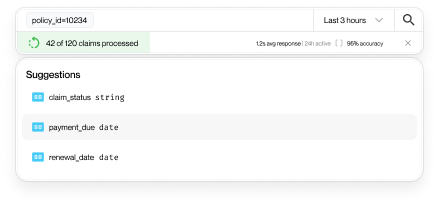
Streamlining daily work and cutting down routine
Every day, insurance specialists find themselves buried under a long list of repetitive tasks: answering client requests, updating policy records, preparing documents, and sending payment reminders.
If you feel that sometimes you’re working like a robot…
Maybe this work should actually be done by a robot.
Virtual AI insurance agents can take over much of this boring routine. They respond to questions in real time, keep communication channels active around the clock, and reduce the need for constant manual input. By handling straightforward operations, AI insurance agents lower the risk of mistakes and keep the workflow moving smoothly.
Better Service Quality and Faster Decisions
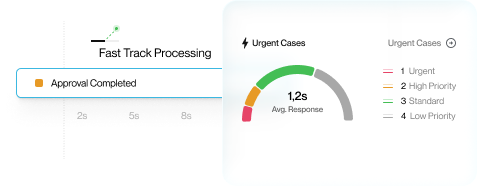
Another key benefit of AI tools for insurance agents is speed. Modern customers expect quick answers and a simple, transparent process. Delays in claim handling or missed follow-ups can damage trust. AI agents solve this by giving immediate access to relevant information and keeping track of every interaction.
They can compare policy options, suggest the most suitable plans, and support underwriting by analyzing client data and risk history. Automated reminders and status updates also make sure no request gets lost along the way.
PROCESS
How Does Insurance
AI Agent Work
We aim to create a solution that works perfectly for your business, not your competitor’s. Zentegrio AI agents are made-to-measure, so we start with understanding business needs and then develop a product that fits in. Here is how we do it.
The first step is deciding which responsibilities the Insurance AI Agent should take on. Insurance teams spend much of their time on routine but necessary work – tasks that are important yet repetitive. Delegating these to AI makes a measurable difference. Typical routine tasks include:
By focusing on these processes, the system reduces the manual load and delivers one of the most visible benefits of AI in insurance – more time for meaningful, client-focused work.
Once the scope of tasks is set, the AI Agent must be embedded into the insurer’s existing tools. Rather than adding new complexity, the goal is seamless cooperation with platforms already in use. Key integrations usually are:
Employees continue using their familiar workflows, while the agent quietly provides support in the background. This stage shows the real AI impact on insurance – smoother operations, consistent answers, and faster service without changing established processes.
After integration, the agent goes live in a test setting and gradually takes on more responsibility. It starts small, but quickly builds confidence and accuracy as it learns from real cases. In daily operation, the Insurance AI Agent can handle:
Over time, these capabilities grow stronger. The longer the system runs, the more refined and reliable it becomes. That ongoing improvement is one of the lasting benefits of AI in insurance – efficiency that compounds month after month.
By combining automation with adaptability, AI insurance tools become more than just software. They evolve into a dependable support layer for employees and clients alike, setting a new standard for modern insurance operations.
BENEFITS
Benefits of Insurance AI Agent
FAQS
FAQs about Insurance AI agents
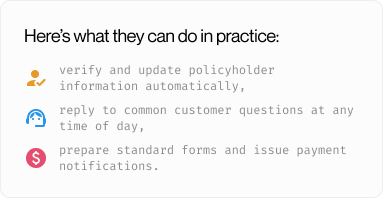
Unlike traditional tools, insurance agents AI can understand requests in natural language, search across policy databases, and respond in real time. They can:
handle incoming inquiries from clients around the clock,
update or verify policyholder details,
send reminders about renewals or payments,
prepare claim summaries for review.
The idea is simple – free people from repetitive admin work so they can focus on clients and decision-making. Over time, the system adapts to the company’s workflows and becomes more accurate.
Say a client wants to know the status of their policy – the AI Agent pulls it up immediately. A new claim comes in – it can check details, draft a summary, and remind the client about missing documents. Everything runs within company rules and compliance standards, so the output stays reliable.
The real strength comes with time. Each interaction teaches the agent how the business operates, which workflows repeat, what clients ask most often, where delays tend to happen. Gradually, it becomes sharper and more useful, like a dependable digital colleague who takes care of the repetitive jobs and lets people focus on cases that need judgment and personal attention.
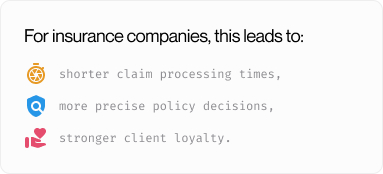
The impact isn’t just about time. Claims move through faster, errors are reduced, and clients get answers without delays, all of which improves satisfaction and retention. Companies often see:
shorter claim cycles,
fewer missed renewals,
lower administrative costs,
stronger client loyalty.
Over the long term, the effect compounds. With every interaction, the system learns more about company workflows and client behavior, which means accuracy keeps improving while manual effort keeps shrinking. The result is growth without needing to scale headcount at the same pace, making the investment in an AI Agent pay back many times over.